Want to Try Ice Boating? It’s all here. Click to start
Latest
Sun Nov 15th Bristol Bound Swap/Lunch/Meeting
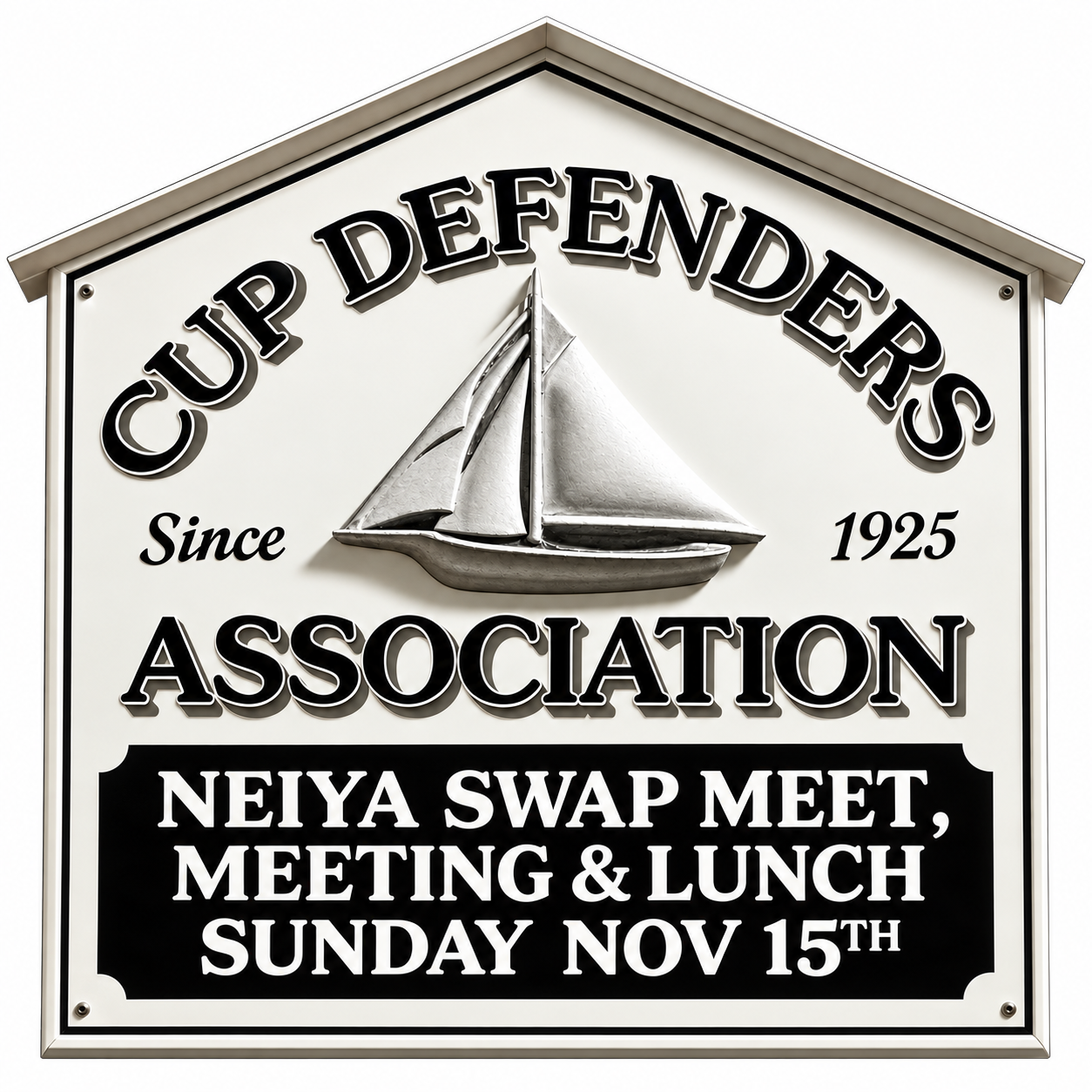
NEIYA Annual Swap Meet, Lunch & Annual Meeting
Sunday, November 15, 2026 | 10:00 AM–3:00 PM YES SUNDAY
Cup Defenders Association
230 Wood St., Bristol, RI 02809
Lunch: Club subsidized price $20
This year, we begin another New England iceboating season in a particularly fitting place: Bristol, Rhode Island, a town where building fast sailing machines became both a craft and a tradition.
During the golden era of the America’s Cup, generations of Bristol craftsmen worked at the Herreshoff Manufacturing Company building some of the fastest and most innovative sailing yachts in the world. Shipwrights, machinists, patternmakers, foundrymen, riggers and sailmakers turned drawings and ideas into boats that made Bristol synonymous with the America’s Cup.
The boats became famous. Most of the men who built them did not.
Their influence, however, extended into the Bristol community. The Cup Defenders Association was formed in Bristol in 1935, when the great Herreshoff Cup era was not simply history, but still part of the town’s working memory. Herreshoff employees participated in the Association, and its bocce teams carried the names of the great America’s Cup boats built just down the road.
It is a spirit that should feel familiar to iceboaters.
Build it well. Make it light. Keep experimenting. And find a way to make it go faster.
Join us Sunday, November 15, for the NEIYA Swap Meet, Lunch and Annual Meeting. Bring the gear you want to sell, trade or give away and find what you need for the coming season. The official gathering runs 10:00 AM to 3:00 PM, although some of us will be there earlier setting up boats, parts and gear.
After the meeting, we plan to carry that spirit down to the Herreshoff Marine Museum and Bristol waterfront, where generations of craftsmen turned wood, metal, canvas and imagination into remarkable sailing machines.
Before long, we hope to be doing much the same thing on our ice.
More details on the swap, lunch, meeting schedule and museum visit to follow.
Think Ice,
John
DN5023
John@neiya.org
The Big Loss (Gain) Day
Today (September 22nd) is the Autumnal Equinox. The Big Loss Day. We have reached the time of year when daylight is disappearing at its fastest pace.
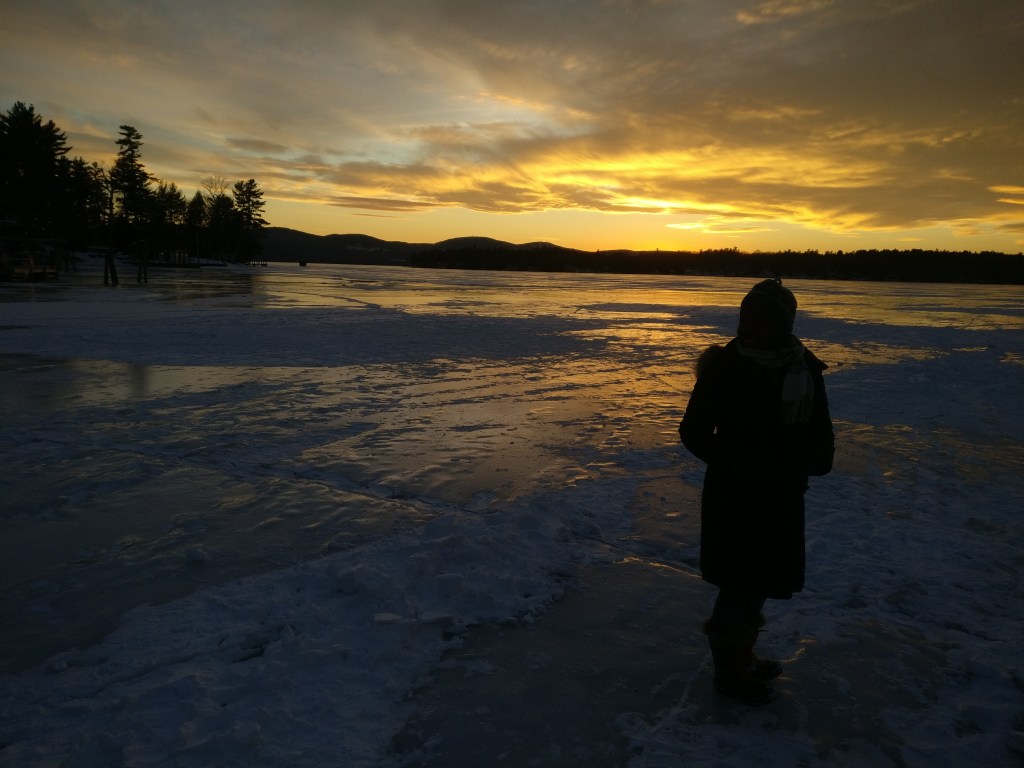
But for iceboaters, it’s The Big Loss (Gain) Day.
Every minute of daylight lost is another small step toward winter. Every minute of daylight lost is paid back with fun and excitement over the winter’s ice.
As we move closer to first ice and another iceboating season, the clues are increasingly around us. The shadows are getting longer. Daylight hours are shrinking. Evenings are arriving earlier and the sun is riding lower across the sky.
For most people, these are signs that summer is over. For us, they are encouraging signs of what is ahead. The waning daylight and lower sun angle help drive the profound changes in temperature and weather that will eventually create our winter playground.
There is still plenty of soft-water sailing ahead and certainly no ice in the immediate forecast. But the seasonal machinery has started turning in our direction.
That also means it is time to start thinking about boats, runners, sails and all those projects we promised ourselves we would finish before next season. The time is here and now so get it done. I started last weekend have you?
We have an important date to put on the calendar. And YES its on a Sunday this year.
NEIYA ANNUAL MEETING & SWAP MEET
SUNDAY, NOVEMBER 15
Our annual gathering is coming up quickly. It is a chance to reconnect with fellow iceboaters, buy, sell and swap boats and gear, talk about the coming season and take care of the Association’s annual business.
Venue information will be announced tomorrow.
For now, save the date and start looking through the shop, garage and where ever you have rat holed your ice program. Figure out what needs attention, what you need for the coming season, and what might be better off in another iceboater’s hands. Remember old stuff to you could be a huge step up for someone else. Help others go faster with some fresh equipment
The days are getting shorter.
The shadows are getting longer.
For an iceboater, that’s a gain.
Think Ice,
John Stanton
Commodore, NEIYA
DN5023
John@neiya.org
Winter Thought….
Thanks to Eben Whitcomb for sending this along; ‘Fess up gang, who has been remiss about working on iceboat projects all summer?
Time to get cracking! The Western Challenge is about 90 days away and who knows when the first ice in NE will present itself?
Looking forward to the season and re-connecting with the whole hard-water crowd.
Cheers! T DN US 5224
NE Poster Boy!
Hey Folks, looks like the people in WI are going to recognize their maritime achievements with a state hall of fame. A great idea as they offer more to the maritime world and trades than you might think.
That said I got a kick out of seeing the photo Scuttlebutt picked to go with their announcement of the article; you can see the late, great Hal Bowman (1277, SC), Joe Meade (637, NY), and most importantly Eben Whitcomb (4775, CT) sailing the mighty WHARF RAT. Also visible is Julie Richards (4868, MI) and finally Dan Hearn (5352, WI) as the token Wisconsinite!
Congrats to all for the unintended photo bomb and to the state of WI for getting the Hall of Fame up and running. We will all see you soon!
Not just “America’s Dairyland” >> Scuttlebutt Sailing News: Providing sailing news for sailors
|
Rembering Lloyd Roberts
Well, Lloyd has left us. Fair winds and black ice forever and all that…
He has left us a lot in other ways. Of course, he left us the book, “Think Ice” which is required reading for anyone interested in sailing on the hard stuff. I refer to my signed copy all the time. I treasure it even more now that Lloyd has passed. So many gems in there…
In the section where Jeff Kent was describing the amount of work and time that goes into being good at this Lloyd added in brackets the words “Jeff lives iceboating.” Said a lot about Jeff but also spoke volumes about what your attitude has to be if you want to get on the podium. Doing it half-assed won’t get you there.
He left us piles of CIBC newsletters, literally cut and pasted and xerox-ed and mailed out on this stuff we used back in the day called “paper.” I have all of mine filed away and grab one at random now and then and marvel at the guy’s dedication to the sport and putting it out there. His writing style was classic.
I was lucky to be living in Maine from about 1998-2001. I got to meet Lloyd and get to know him a bit and he was the coolest cat out there. Smart, fast, eager to share every detail he could about building and sailing any kind of iceboat, especially DNs. He knew a lot about a lot but wasn’t obnoxious about it. I was thrilled to show him my first boat and he graciously took it for a lap around Chiki and gave me a thumbs up on getting it. That gave me some confidence!
My favorite story about Lloyd and iceboating is this one… I had been living in Maine for three years, working on a big sailboat and getting pretty bored and burned out on it. I was the mate, the captain wasn’t going anywhere, I was never going to get a promotion or a raise or anything… The good news was I’d started sailing DNs in 1999, just ripping around on whatever lake was good that week and wondering how to get into the racing aspect of it. I was hooked big time and that was keeping me going.
Then there was a turn of events that literally changed my life. First, my plank broke. I had no idea how to build one so I emailed Lloyd and asked for advice on building a new one. It was one of the first emails I ever sent, in fact. Second, I got fired from my boat job the next morning because of my “performance, absenteeism, and attitude.” I guess that pretty much covered it although I thought my performance was good enough, my absenteeism was only in winter when there was ice, and my attitude was, I’ll admit, reeeaaaallllly bad.
Anyway the captain gave me the news at about 8 AM that morning. By 10 AM my “retirement party” was in full swing, which means my neighbor Jules and I, along with the second mate who had come by, had polished off a bottle of wine or three that I’d pilfered from the boat and had several puffs of this stuff called Carrabassett Valley Kind Bud. I was, in a word, tanked. We all cope with adversity in different ways!
In the middle of all this the phone rings and it’s Lloyd. I had the stereo cranked (Little Feat’s “Waiting For Colombus”) and I was kind of abrupt in explaining that I couldn’t hear him and wasn’t in any condition to discuss much. Did I mention that I was hammered? The festivities raged into the late evening.
The next day as the fog lifted and I was putting the fragmented memories of the day before together I remembered that Lloyd had called I and I’d been less than polite. Oh shit. So I emailed him, apologized and explained that I’d been fired and was kind of in shock and very drunk, and asked if he was still willing to help me put a new plank together.
His response was priceless and spoke volumes. “Hello James, no need to apologize. Don’t sweat the job; the happiest, sailing-est iceboaters are the ones who don’t put too much of a priority on things like work. Call me when you sober up and I’ll tell you how to build a plank.”
There was a lot of wisdom and perspective in those few words! I really took them to heart. And he did tell me how to put a plank together, and it is in use to this very day.
And that is the biggest thing he left me, the lesson to keep your priorities in order. Thank you Lloyd for that and everything else. You set an amazing example for us all.
James “T” Thieler DN US 5224
Think Ice, and Remember the Man Who Wrote the Book

With the summer season in full swing with work, sailing and other fun, I have been negligent about putting fingers to the keyboard. But like many of us, even in the middle of summer, I find myself looking at lakes and rivers and thinking about their upcoming frozen state. While racing on the Hudson and other soft-water venues, my thoughts inevitably turn toward the coming ice.
This summer ice rally post has been delayed, but recent happenings have finally pushed me to put fingers to keyboard.
I recently drove past Chickawaukie Pond on my way to the Rockland Boat and Harbor Show. As I passed, I thought about my old friend and fellow iceboater Lloyd Roberts, whose house sits at the top of the lake. There was no time for a side trip that day, but fortunately I had seen Lloyd twice over the past two years.
I had known Lloyd since 1992. The last Summer I saw him, at the estate auction of fellow iceboater John Eastman, I told Lloyd that I had known him for half my life. And he had been a positive influence on many aspects of my life.
The winter before, in 2024, I had pulled up on Lloyd’s beach in my DN. Seeing me approach, he came out on the porch and we had a long chat about iceboats, our mutual iceboating friends and life in general. He was pleased that the NEIYA was continuing to bring people to the ice. Eventually we walked out onto the ice where my boat was parked, like we had done so many times at his beach and other ice venues. This would be the last time we stood on the ice together.
It was one of those simple encounters that did not seem particularly significant at the time, but means a great deal now.
At Eastman’s estate auction, Lloyd mentioned that he was bidding on one of John’s cameras because he wanted something to remember him by. In much the same way, the work I put into assembling Lloyd’s Cheapskate plans and manual on iceboat.me will now serve as am eternal reminder of Lloyd for me.
Lloyd’s contributions to iceboating stretched across decades. Whether you came into the sport in the 1970s, 80s, 90s, (as I did in the early 90s), or in the 2000s, 10s or 20s, his influential hand touched us all.
His kind, gentle and methodical approach to solving problems, including the problems of iceboating, followed him throughout his life. When Lloyd saw something that could help the sport, he did something about it.
Wanting to introduce people to our beloved sport, Lloyd wrote Think Ice, the all-in-one how-to iceboating manual, available through the Chickawaukie Ice Boat Club:
Recognizing the need for an iceboat that could introduce newcomers to the experience, Lloyd developed the Gambit, a boat particularly well suited to giving rides. There are official plans out there somewhere, and I will try to locate them and update this post in the future.
And recognizing that cost could be a barrier keeping people from getting into the sport, Lloyd created the Cheapskate, a simple iceboat that could be built from commonly available materials, a little plywood and some determination.
The Cheapskate plans and manual can be found here:
Think Ice, the Gambit and the Cheapskate all say something about Lloyd. He did not just love iceboating. He wanted other people to discover it, experience it and become part of it.
Information about a remembrance gathering for Lloyd should be posted on iceboat.me in the next couple of weeks.
Farewell my friend and may you find endless black ice and a steady breeze rocket you down the plate.
Think Ice, and remember the man who wrote the book.
John
DN5023
john@neiya.org
2027 DN RANKINGS!
Hello All-
Yes, the rankings are out!
The eastern part of the continent represented well with US sailors T. Thieler, Chad Atkins and Jeff Roseberry all hanging in the top ten along with Nicholas Mabboux, Peter Van Rossem and John Curtis from north of the border. Well done gang!
Plenty of other New Englanders are on the list as well; Take a look, get motivated, hit the gym and get working on your gear!
2027 Ranking List Published – DN North America
|
Summertime Blues
With summer rapidly approaching and as last years hardwater sailing memories begin to be filed away in the deeper part of the brain, thoughts for summer fun tend to blossom forth with unbridled passion. Many have already had the shakedown cruise in whatever water craft you choose and active racing has begun in earnest on soft water. Our local group, affectionately known as the, “Gene’s Beach Yacht Club”, has ,”most” of its fleet in the water. For years I was the only sailboat moored along a tiny strip on sand on our local lake.
Maybe 15 years ago, a Zuma made its presence and occasionally we would meet either sailing or post sail sit on the minuscule strip of sand. Occasional a Sunfish might join in. There would still be 6-8 motorboats from zoom zooms to small tin tubs for fishing, still leaving enough room for all. More recently, a Hobie Windrider trimaran joined the fleet and naturally an informal sail group happened.Word got out from friend to friend and last year the number of sails surpassed the number of motors for the first time since I moved here in 1987. Good news you may say but as you know the definition of a race is two sailboats on the same lake. Now I have been able to hold my own in a few of the local whole lake regattas over the years with several 2nds and one win, (on board marital mutiny caused the lead boat to drop out). I’ve sailed many craft and enjoy everything from sunfish to dinghies and cats. I enjoy leisurely sails but will always try to tweak an extra 1/10 knot of speed. My current craft, a home built ,”Flattie fourteen” plywood sailboat from John Garners book, was my retirement project and has been on the water for the last 8 years. It gets me around but is not the fastest in the fleet, but it suits me and is pretty. Anyway, the club unofficially sort of formed 5 years ago and any day with wind would find the fleet sailing about, sometimes chasing each other. Later afternoon would find captains and spouses gathered on the beach for celebrations of the day. A convivial atmosphere to say the least. Several sail lunches to an island have occurred as well. There has been an evolution over the last couple years that has been bothering me. I’ll blame it on Zuma lady who saw a Hobie Adventure trimaran sailing at the other end of the lake. She just had to have one of course. Clifford, the big red tri appeared on her mooring. Well, that opened the flood gates. She convinced two of her friends to buy the single version of the Hobie Islander. To add insult to injury, after trying for years to find the right boat for my wife, she deserted the monohull for one of these tris. (Yellow of course to match the others.) Now when you look out from shore, it appears to be a fleet of bumble bees floating about with a red mama watching over them. And finally another member who claimed to have the slowest boat joined the tri fleet too! So now I believe I can claim the title as the boat that allows a leisurely scenic afternoon sail.
That, you may say is enough to give any sailor the blues. However, the real cause is one of the unwritten bylaws of the unofficial club, (actually everything is unwritten) that is the, “Last/First” rule. This has nothing to do with racing, but order of launch. The last boat to be launched in the spring, and the first boat to be pulled in the fall, has to supply the beer,(or beverage) for the members. Only for the first and last gathering, not all summer just to clarify. Vacation trip last fall and projects and shoulder rehab this spring has bestowed upon me the great honor of being the purchaser of such refreshment. Alas fate sometimes is a cruel mistress.
I hope the only blues you all have this summer is music. Fair winds and following seas to you all, be it on salt or salt less water.
Fair Winds To Jane Pegel
We are sad to hear of Jane Pegel’s passing….
To say she was a major player in the DN class is a massive understatement. She was a keen competitor, compiling a set of lifetime results that anyone would envy. On top of that she did a ton of work behind the scenes to develop and maintain the standards that we enjoy in the DN class.
I was lucky to get involved in racing DNs in time to compete against her a few times before she retired. Of course she beat me!
Jane Pegel, 1934–2026: Champion, Innovator, and DN Leader – DN North America
|
The Last Dance?
We all know it’s a feather in our cap to be the first person on the planet to sail an iceboat in a given season. Seriously, that must be a cool feeling and probably the title shared by the smallest number of people. Mike Madge was often the first every year for a long time as he lived on Thunder Bay in Ontario. Some Russians would beat him to the punch sometimes by getting on the ice on a giant reservoir in Novosibirsk Reservoir – Wikipedia. I think maybe Paul Chamberlain surprised everyone one year by getting his DN going on a patch of ice out in Saskatchewan – Wikipedia. I recall sailing Quaboag Pond a few times in November a few years back…. Good stuff indeed!
But the iceboating season usually ends not with a bang but with a whimper… do we ever know who got out for the last time in the spring and where they did it?
This year SO FAR it looks like Dave Frost and Martha Croasdale get the credit; They found some ice in Thunder Bay a few days ago and lived it up. Well done to the both of them and whoever else was with there; They found the spot, checked it out and sailed it (most importantly) without incident. Kudos!
With this spring being a cold and cloudy one I have to wonder if Moosehead Lake might still have a few hours of sailing left in it? Anyone interested in blowing off the yard work and house chores to check it out?
The Last Dance – DN North America
|
In Case You Missed It….
Here is a link to Andy Grattons talk on all things iceboating; be sure to check it out before Sunday!
Iceboating Webinar April 16!
This will be well worth tuning in to!
Andy Gratton on Iceboating: Free Webinar April 16
|